
Author
Maxine Alders
Date
July 2026
Category
Regulations
The EU is shifting repair, reuse, and product lifespan from “nice-to-have” to a fundamental consumer right. That sounds like a compliance issue. In practice, it lands on the online store’s desk in the form of new workflows, return logistics, and capacity planning. The good news: with Returnless, you can easily incorporate repairs as an additional step in your returns process. Discover how Returnless customers have already implemented this process. Get inspired to create your ideal repair workflow.
In this blog, you'll learn more about...
1. What does the Right to Repair entail?
2. Why this affects your operation
3. Three examples from our customers
4. Checklist: Are you ready for the Right to Repair?
5. The conclusion
6. Frequently Asked Questions
What does the Right to Repair entail?
The following two documents are relevant to the Right to Repair:
Ecodesign for Sustainable Products Regulation
Sets requirements for how products are designed: more sustainable, easier to repair, with information available throughout their entire lifecycle. It will be rolled out in the coming years on a product group-by-product group basis, starting with categories such as electronics and textiles.
Right to Repair Directive
Gives consumers the right to request repairs from manufacturers and extends the statutory warranty by 12 months if the product is repaired instead of replaced. Member states must transpose this into national law by July 31, 2026.
The exact scope, dates, and obligations vary by product category and by country. Therefore, treat this section as a guide, and always have the specific rules for your product range verified by a legal specialist.
Why this affects your operation.
The law concerns consumer rights. The reality for online retailers is different. A right to repair means you need a repair intake process, a way to submit and get repair costs approved, parts in stock, and a returns process that can send an item for repair instead of directly for a refund. The 12-month warranty extension means you’ll need to keep track of which items have been repaired and when. Ensuring parts availability requires supplier agreements and inventory planning.
In other words: the regulations are written for the consumer, but the work for the online store is operational. Handled properly, repairs can save you serious money. A repair or a replacement part is almost always cheaper than a full return with a refund. A robust repair process therefore not only ensures legal compliance but also has a positive impact on your profitability.
3 examples from our customers.

Repairs, warranties, and returns
in a single process
Kamera Express sells camera and video equipment through more than 30 stores in four countries. Electronics is precisely the category that the Right to Repair targets first, and Kamera Express already handles about 9,000 repairs per year, both in and out of warranty.
They consolidated repairs, warranties, and returns into a single system using Returnless, rather than handling repairs separately via email. Now they provide repair quotes directly within the workflow. The customer either agrees and pays for the repair, or pays only the diagnostic fee if they decide against it. No separate email exchanges, no payments that don’t come through until weeks later.
For an operations manager, this is the perfect blueprint: one request, one process, one workflow for returns, repairs, and warranties.

"By incorporating repairs into the returns process, everything is managed in a single system. This is efficient and user-friendly for our returns and repairs team."
Jelle Lagendijk · Senior Repairs & Returns Specialist at Kamera Express

Repair option for minor defects.
My Jewellery takes a different approach. For minor defects, the return form proactively offers the customer a repair option instead of a full return.
This decision is made automatically, based on the reason for return and the product type. A minor defect in a piece of jewelry is routed to a repair option before it ever becomes a return. This keeps the product with the customer, avoids the logistics of a full return, and reduces the volume your team has to process.
It also aligns seamlessly with regulations: repair first, then replace. And to the customer, it comes across as forward-thinking, not as a hurdle.

"Returns are no longer just an operational process. With the right data and automation, they’ve become an opportunity to improve both the customer experience and our internal processes."
Britt Kusters · Customer Care Supervisor at My Jewellery

The circular model.
Tiny Library rents out baby and children’s products, meaning that about 95% of what they offer is, by definition, returned. For them, returns are the business—not the exception.
Their operation is built around reuse. Return rules automatically route incoming items to external refurbishment partners, where products are cleaned and refurbished, often ready to be rented out again within a single day. Return data feeds into forecasting, so they know when items will come back and can plan inventory accordingly.
Strictly speaking, Tiny Library isn’t a repair case, but it shows where things are headed: a model in which products are designed to be returned, refurbished, and put back into circulation. If you’re looking for inspiration beyond repair, this is it.

"Our process is a bit different from that of a standard e-commerce company, which is why Returnless’s flexibility and support are incredibly valuable."
Tiemen Roest · Product Manager at Tiny Library
Are you ready for the Right to Repair?
Review the checklist below for a practical starting point for your operation. Adapt it to your product range and verify the legal details separately.
-
Product Identify which products in your product line are subject to repairability requirements. -
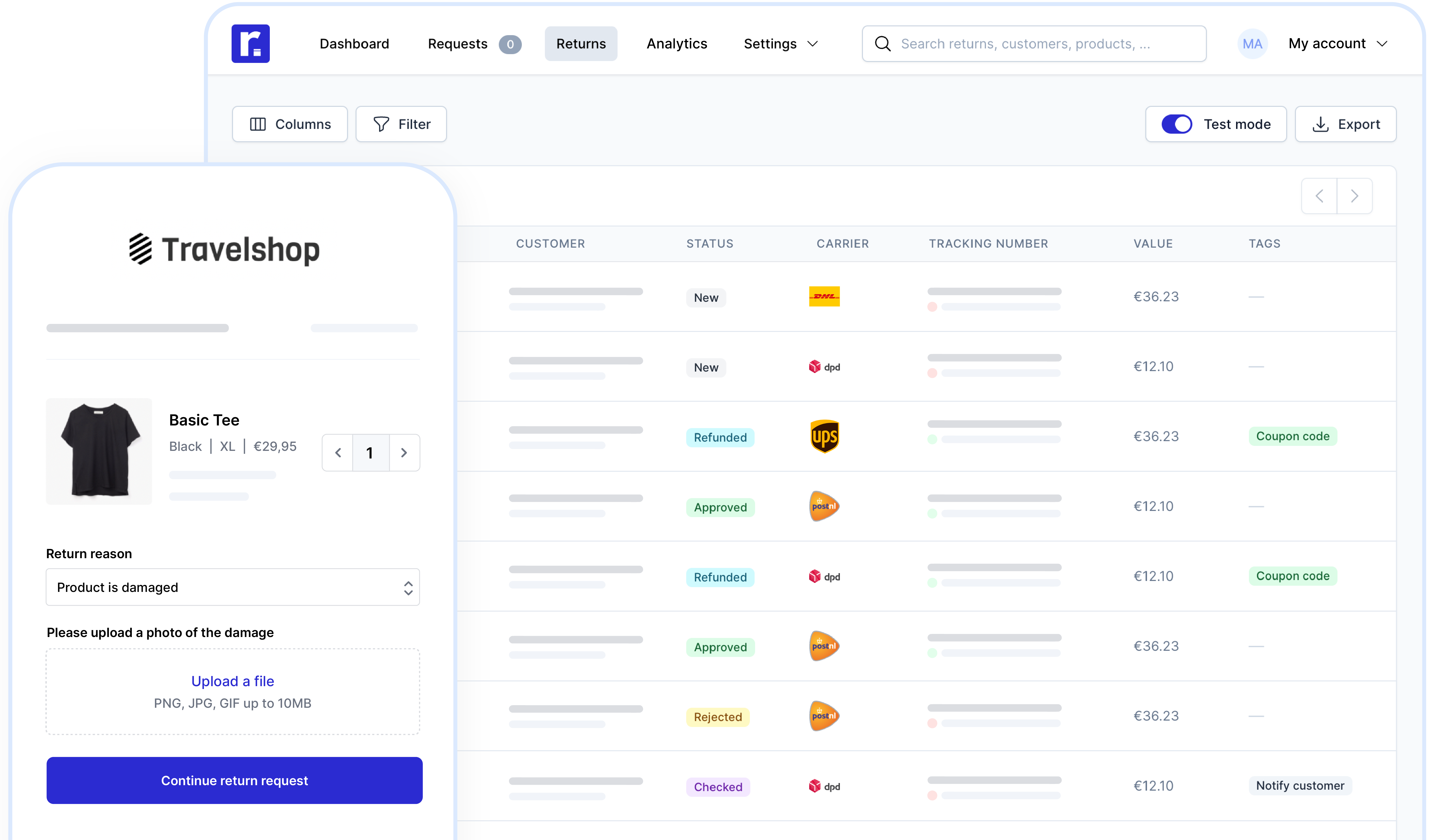
Intake Add a repair option to your returns process. Also, make sure to request the correct information, such as the reason, diagnosis, and photos. -
Quote Add a step for repair quotes and approval so customers can accept and pay for a repair within the same workflow. -
Return Rules Define the “repair versus replacement” logic and apply it automatically using Return Rules. -
Warranty Track repaired items and the 12-month warranty extension so you don’t run into issues with warranty claims. -
PartnersSend items to repair or refurbishment partners when in-house repair isn’t an option. -
Analytics Use Analytics to analyze repair and return reasons to prevent returns and defects at the source.
The conclusion.
The Right to Repair is not just a legal deadline. It represents an operational shift toward repair, reuse, and a longer product lifespan. Kamera Express, My Jewellery, and Tiny Library demonstrate that this is already feasible, and that a repair-oriented approach is often a more cost-effective option.
curious how to set up repairs with Returnless?
In just 30 minutes, see how repairs, warranties, and returns come together in a single workflow in Returnless.
Schedule a demoWhat is the EU Right to Repair Directive?
The EU Right to Repair Directive is a law that gives consumers the right to request repairs from manufacturers for certain products, at a reasonable price and within a reasonable timeframe. In addition, the law extends the statutory warranty by 12 months when a consumer chooses repair over replacement. Member States must transpose this into national law by July 31, 2026.
When will the EU Right to Repair take effect?
Member States must transpose the Right to Repair Directive into national law by July 31, 2026. The exact timing and details vary by country, so check with a legal specialist to verify the national rules that apply to your online store.
What is the difference between the ESPR and the Right to Repair Directive?
The ESPR (Ecodesign for Sustainable Products Regulation) sets design requirements to make products more sustainable and easier to repair, implemented on a product group-by-product group basis. The Right to Repair Directive focuses on the consumer’s right to request repairs after purchase. In short: the ESPR shapes the product, while the Right to Repair Directive shapes the consumer’s options once they own it.
Does the Right to Repair apply to my online store?
The Right to Repair applies to product categories that are already subject to repairability requirements under EU law, starting with electronics and household appliances, and will be expanded to include more categories in the coming years. Compare your product lineup with these requirements to see which ones apply, and verify the details with a legal specialist.
What does the 12-month warranty extension mean for returns?
When a consumer chooses repair over replacement, the statutory warranty on that product is extended by 12 months. In practice, this means you need to keep track of which items have been repaired and when, so that the warranty status is accurate across your returns and repairs.
How do I prepare my return for repair?
Add a repair option to your returns workflow: record the reason for the return, include a step for a quote and approval, and automatically send items to a repair or refurbishment location. Do you use Returnless? If so, you can set this up through our Return rules. Tip! Track repaired items for warranty extensions, and use return data to prevent returns at the source.
Is repairing it cheaper than processing a return?
In most cases, yes. A repair or a replacement part is usually less expensive than a full return and refund, especially for larger or more expensive products. Offering a repair first also keeps the product with the customer and reduces the volume of returns.
get started for free.
Play around and test out all features for free. Or schedule a demo with one of our colleagues if you'd like more info first.