
Author
Tessa Stoppelenburg
Date
January 6, 2026
Category
Informative
Just when you are celebrating the successes of your peak season, the peak in returns in January is around the corner. In the busiest returns month of the year, return volume increases by an average of 44.5% compared to the rest of the year. For merchants, this means a significant investment in costs, resources and staff planning. In addition, customers wait longer for their refunds due to the rush, which can put a dent in your otherwise excellent customer experience.
But fortunately, there are some measures to take so that your e-commerce returns process is prepared for the January returns peak. This article gives you numbers, best practices and tools to get a handle on your return flow in January.
In this blog, you'll read more about...
1. Why is January the busiest return month of the year?
2. What is the increase in return volume in January?
3. What does the return peak mean for your webshop?
4. Best practices to get through the peak in returns without problems
5. How other webshops handle the January peak
Why is January the busiest return month of the year?
The traditional peak sales season in e-commerce runs from early October to early January, starting with Cyber Week and ending with New Year's Eve. Shoppers buy gifts for St. Nicholas and Christmas and take advantage of the generous discounts during Black Friday and Cyber Monday. But often these items are not returned until after Christmas, for example because they were unwanted or non-fitting gifts or because there was no time to return the items during the busy Christmas period. For you as a webshop, this means that after the peak sales season, you have to work hard to cope with the return peak in January.
How big is the increase in return volume in January?
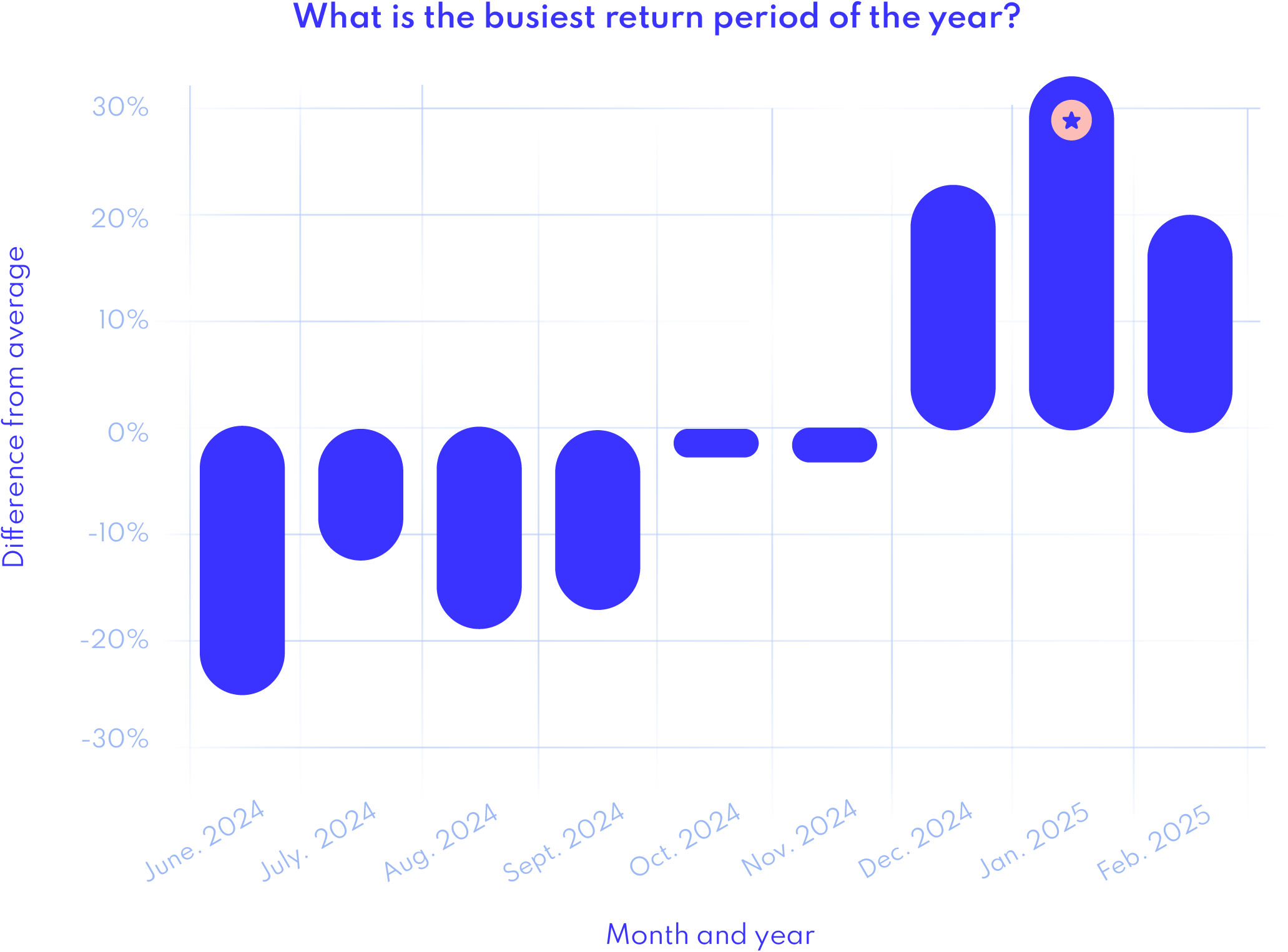
Most returns take place in December, January and February, with last year's highest peak on Jan. 8. Compared to the rest of the year, return volume increases by an average of 44.5% from December to February. This in itself is not surprising, since the number of orders usually increases substantially during the peak sales season. What is striking, however, is that most retailers only expect a 10% increase. As a result, they are surprised by the return spike in January and face capacity issues.
In comparison, the average year-over-year return rate in 2025 was 23.5%, with the most common return reason being "product not to your liking." If you have insight into this data, you can improve your product information, for example, or remove products that are frequently returned during peak season from sale or from the assortment altogether. In this way, you ensure that the already overburdened returns processing during the busiest returns month is put under even more pressure.
Download the Return Benchmark 2025 ✨
Curious about more return numbers? Download the free Return Benchmark with
30+ insights on returns in peak season.
What does the return peak mean for your shop?
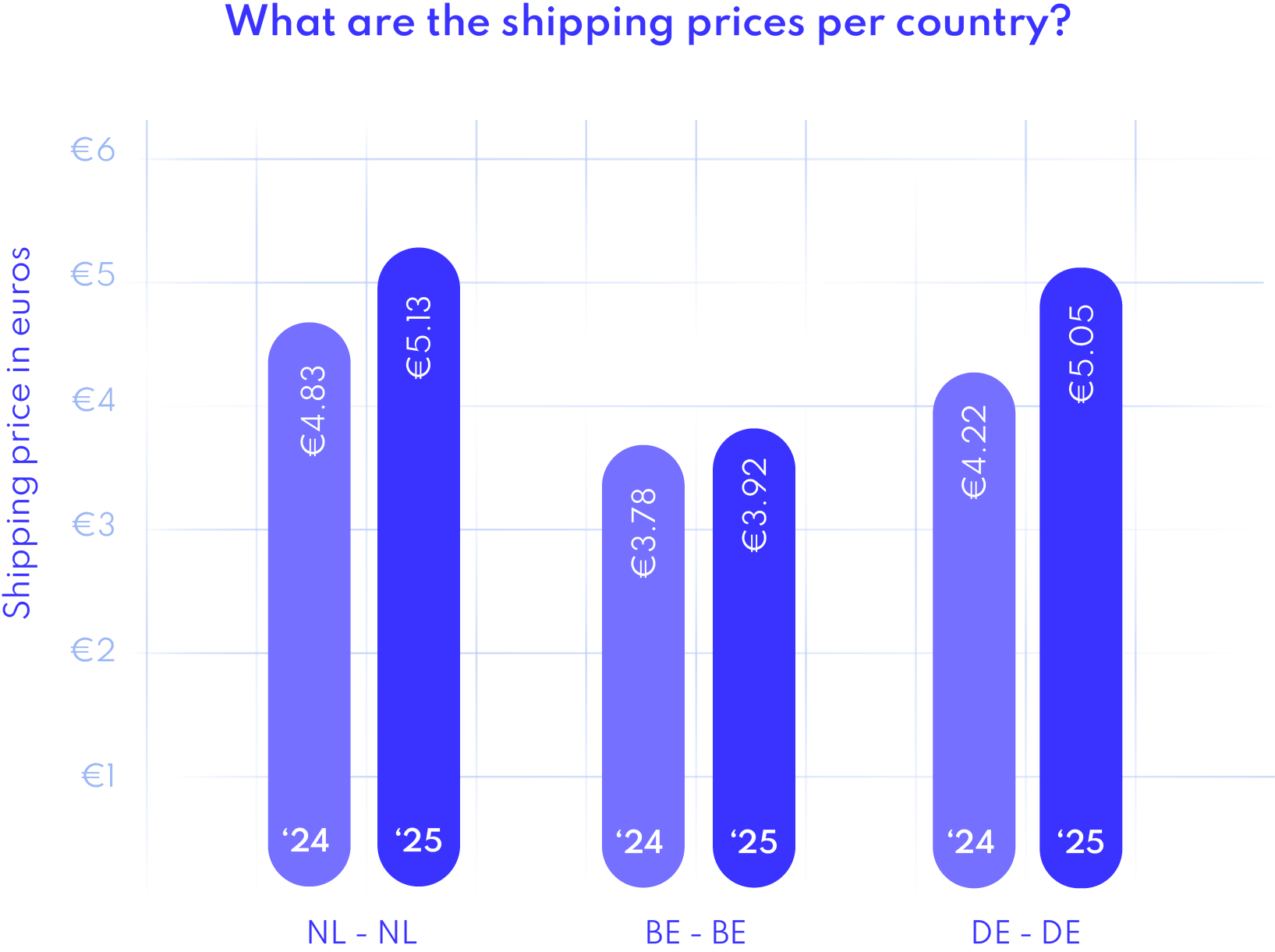
According to 52% of retailers, capacity is the biggest challenge in dealing with the January peak in returns. More returns require more staff and manual processes slow down lead times unnecessarily. As a result, products lie out-of-stock for an average of 23 days, making them less likely to be resold. It takes an average of 13 days after an order until a return is reported, and another 2 days before the package is on its way back to you. Then it takes another 8 days for a return to be fully processed and the refund to be in order. In addition, return rates are rising - in 2025 the average return shipping price was €5.39 - creating additional cost pressure.
High time for change. Below you'll discover our best practices for reducing capacity pressure during the busiest returns month of the year.
6 best practices to get through January's return peak without capacity issues:
1. Prepare ahead of time
Good preparation is half the battle! Don't let the return peak in January surprise you, but adjust your strategy, warehouse and staff planning accordingly. Only 15% of all retailers start preparing more than 4 months in advance. 52% of retailers do not begin preparations until one to two months before the peak season. Review your old return dates early to find out how many returns you can expect during peak season and when they will come in. Make enough room in your warehouse and create extra space for storing and processing returned packages. Have all necessary materials ready, such as packing materials, scanners and labels.
2. Automate your workflow
In addition to preparing physical space, it's wise to also properly prepare your digital workspace for the returns peak. With a smart and automated e-commerce returns process with Automations, you can save as much as 95% of your time. Let your customers register returns themselves via a digital return form, so you can automate follow-up steps - such as rejecting returns when the return period has expired, gatekeeper for products that should not be returned. In addition, do not start refunds manually any longer; some 54.3% of web shops now generate their refunds automatically.
3. Reconsider your return period
It is worth reconsidering your return policy before the high season. Some 16.7% of online stores adjust their return policy during peak season. Shorten the return period during the peak period to better manage the return peak. For example, large retailers such as H&M use a shortened 14-day return period for sale items. This means products are back in the warehouse faster and can be resold faster. It also keeps the return window shorter, allowing you to better predict return volume.
4. Reduce costs through dynamic return rates
Consumer buying behavior has shifted toward greater sustainability over the past year. Many are aware of the harmful impact of returns on the environment and are therefore willing to contribute to return costs.46% of consumers want to contribute €0.50 to a more environmentally friendly return.
To reduce the cost pressure of returns, therefore, more and more online stores are again opting for paid returns. To be precise, in 2025 65.3% of e-commerce companies chose some form of paid return.
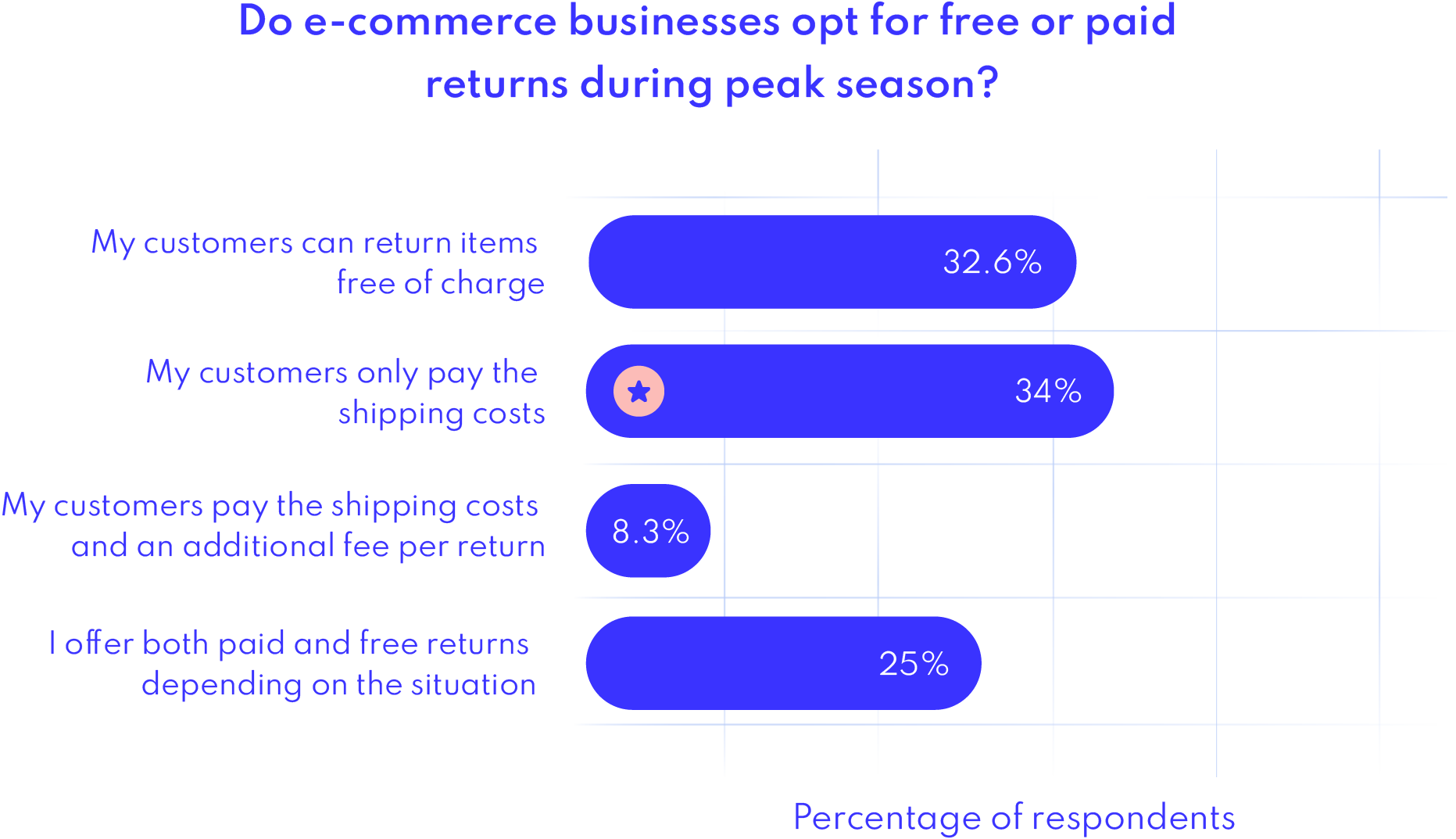
Reduce return costs in different ways and charge (part of) the customer. For example, work with dynamic return costs: customers who return an entire order pay for the return shipment, while customers who return only one item or a defective product can do so free of charge. In addition, you can set a fixed return fee, for example for sale items, that is charged by default. The prerequisite for this is a digital return process in which you use smart return rules.
5. Encourage sales retention with coupons
November and December are the best months for most online stores in terms of sales. What a shame if you have to pay back all these sales in January! A simple but effective solution is to use coupons. Instead of a refund to their account, customers receive a coupon with store credit, which they can redeem directly in your store. This allows the customer to immediately pick out a new product, such as a different size or color, when they make an exchange, for example, and the sales made stay in your business. Our data shows that as many as 17% of all returns were converted to store credit. This results in €2.5M+ retained revenue for Returnless customers by 2025.
How other webshops are tackling the January peak.
At Returnless, we help webshops optimize their returns process. Two clients who now enter the peak season much more relaxed thanks to a fully automated returns process are ZEB and Arktis.
ZEB deploys returns within a smart omnichannel strategy to give customers complete freedom in how they want to return their items: online or in any store. ZEB knows the value of an in-store return; not only does it allow the product to be resold faster, but it also offers smart upsell opportunities and customer loyalty is strengthened. To encourage in-store visits, customers who return their goods in-store receive a €5 voucher. As a result, more than 33% of customers choose this return method.
Arktis is also entering the peak season with a smart returns policy. Since Arktis switched to an automated process, it now only takes 1.5 minutes to process returns, instead of the 5 to 10 minutes the old process took. This allows them to process even large return volumes quickly and efficiently. Also, Arktis gives customers who choose a store credit instead of a refund free shipping for their returns. As a result, around 30% of all returns convert into repeat purchases and Arktis retains some of the revenue made.
Are you ready for the return peak in January?
With proper preparation, automated workflows, dynamic return terms and fees, and a smart return strategy using coupons as a return method, you won't be surprised by the January return peak and you'll actually record the sales made during the peak season.
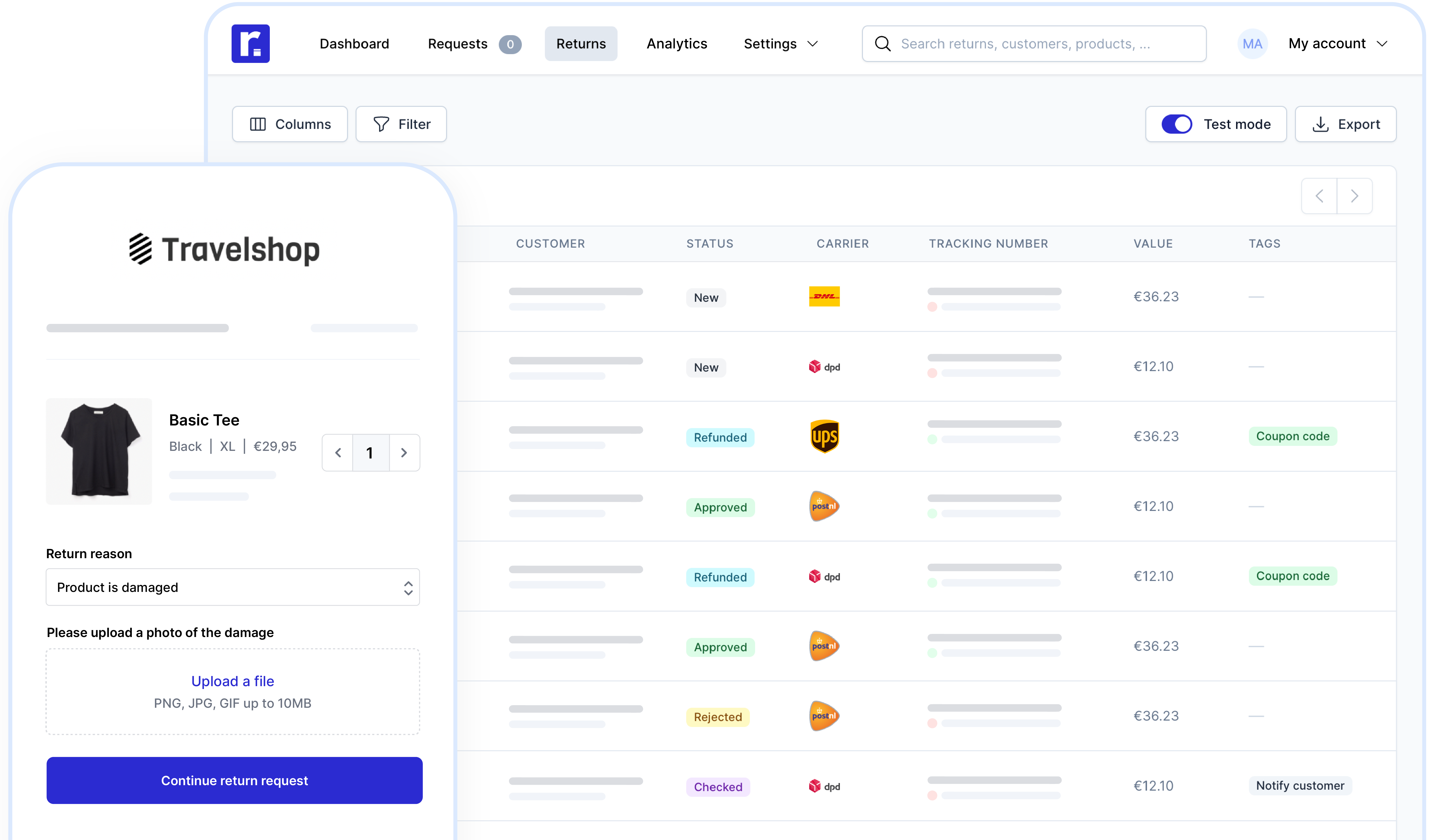
Ready to revamp your returns process? Create a free trial account and see all the features of Returnless, including digital return form and smart return rules and automations. Want more information? Schedule a no-obligation demo with one of our experts. They will be happy to tell you how Returnless can help you prepare for the peak in returns in January.
All data in this article comes from the Returnless Benchmark Report 2025. Download the report below.
Download the Return Benchmark 2025 ✨
Compare your return figures with market averages. Download the free
Return Benchmark with 30+ insights on peak season returns.
FAQ.
Which product categories have the highest return peak in January?
The highest return spikes in January usually occur in fashion, shoes, consumer electronics and home accessories. These are categories that are often purchased as gifts and where it only becomes apparent after use whether the product met expectations. For these categories, extra return capacity in January is crucial.
How does slow return processing affect customer satisfaction?
Slow returns processing creates frustration and uncertainty for customers, especially when they have to wait a long time for a refund or coupon. Research shows that customers want to wait a maximum of 5.2 days for a refund. Longer processing times increase the risk of negative reviews and customer loss.
What is the role of customer service during the return peak?
In January, the number of return-related customer service inquiries is rising significantly. By clearly communicating return information and allowing customers to arrange their own returns through a portal, you reduce pressure on support teams and improve the customer experience.
Can you temporarily treat returns differently in January without losing customers?
Yes. Many web shops apply temporary measures in January, such as adjusted return costs, longer processing times or extra incentives for store credit. Transparency is essential here: if customers know in advance what to expect, they accept these adjustments faster.
How much extra sales can I keep by offering coupons?
With coupons, you can retain a tremendous amount of sales during peak season. On average, 17% of returns convert to a coupon; with additional incentives, this can increase to 44%. Consumers also spend 20% more on repeat purchases. This makes coupons one of the most effective ways to reduce lost sales.
get started for free.
Play around and test out all features for free. Or schedule a demo with one of our colleagues if you'd like more info first.