circularity with returns.
How Tiny Library used Returnless to automate their returns process and drive circularity.
For Tiny Library, returns are not a secondary matter, but the core of their business. As a rental platform of baby and children's products with thousands of returns per month, it's all about retrieving and reusing products in an efficient way. So in this case, returns are actually something positive, a totally different approach within e-commerce. Through a clever headless integration with Returnless, Tiny Library made the return process easier for their customers and linked return data directly to their subscription records. The result: less manual work, fewer support questions and better inventory management.
📊
Forecast of returns
with return data
👩💻
43% fewer questions
about returns
⏱️
1-2 hours of support time saved per day
⚙️
Headless integration
between Returnless and customer portal
short intro.
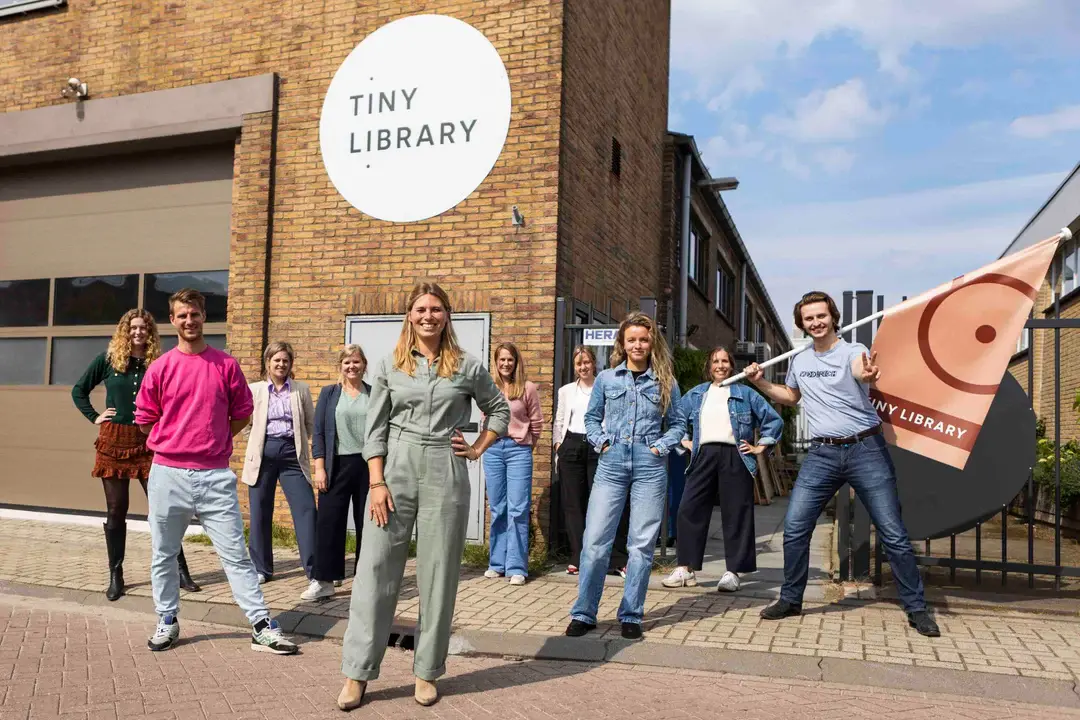
Tiny Library rents out circular baby and children's products, such as strollers, cots and toys. By focusing primarily on rentals rather than sales, the company helps parents consume more consciously and sustainable. Tiny Library has been founded five years ago and continues to grow rapidly: from a team of six employees to a team of 20, including its own warehouse.
Tech stack:
success story of Tiny Library.
By Tiemen Roest, Product Manager at Tiny Library.
returns as a core business.
Whereas many webshops prefer to avoid returns, return flow is actually essential for Tiny Library. "If a customer doesn't return, we have a problem," says Tiemen. 95% of all products are rented out, so almost everything eventually returns. Therefore, the return process must be simple, fast and scalable.
from separate return forms to a headless integration.
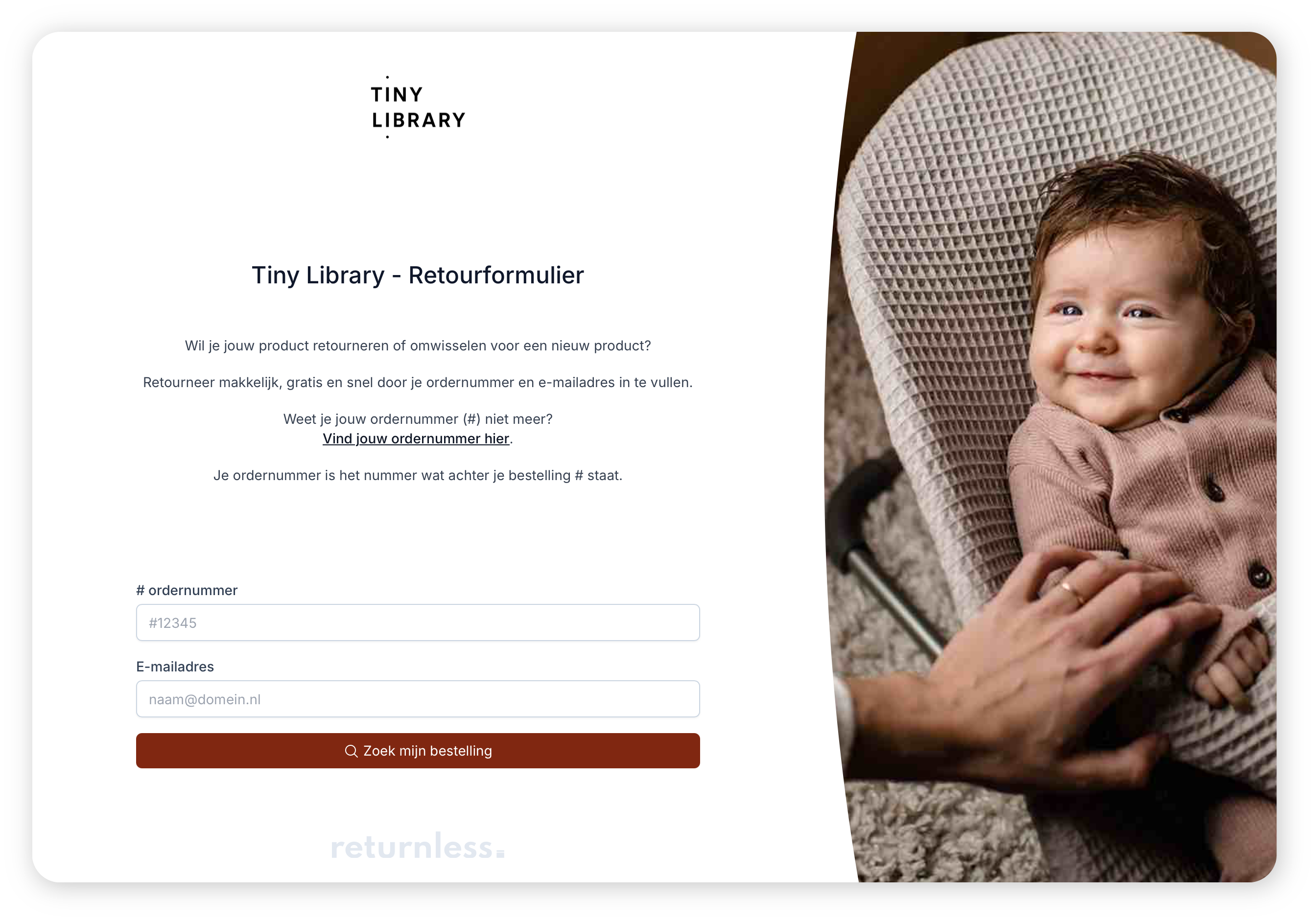
Previously, Tiny Library worked with the standard Returnless portal, in which customers had to manually enter their order number. "That regularly caused confusion because customers had to look up their order number again," says Tiemen. Especially for rental subscriptions with multiple products, it was not always clear which number belonged to which item.
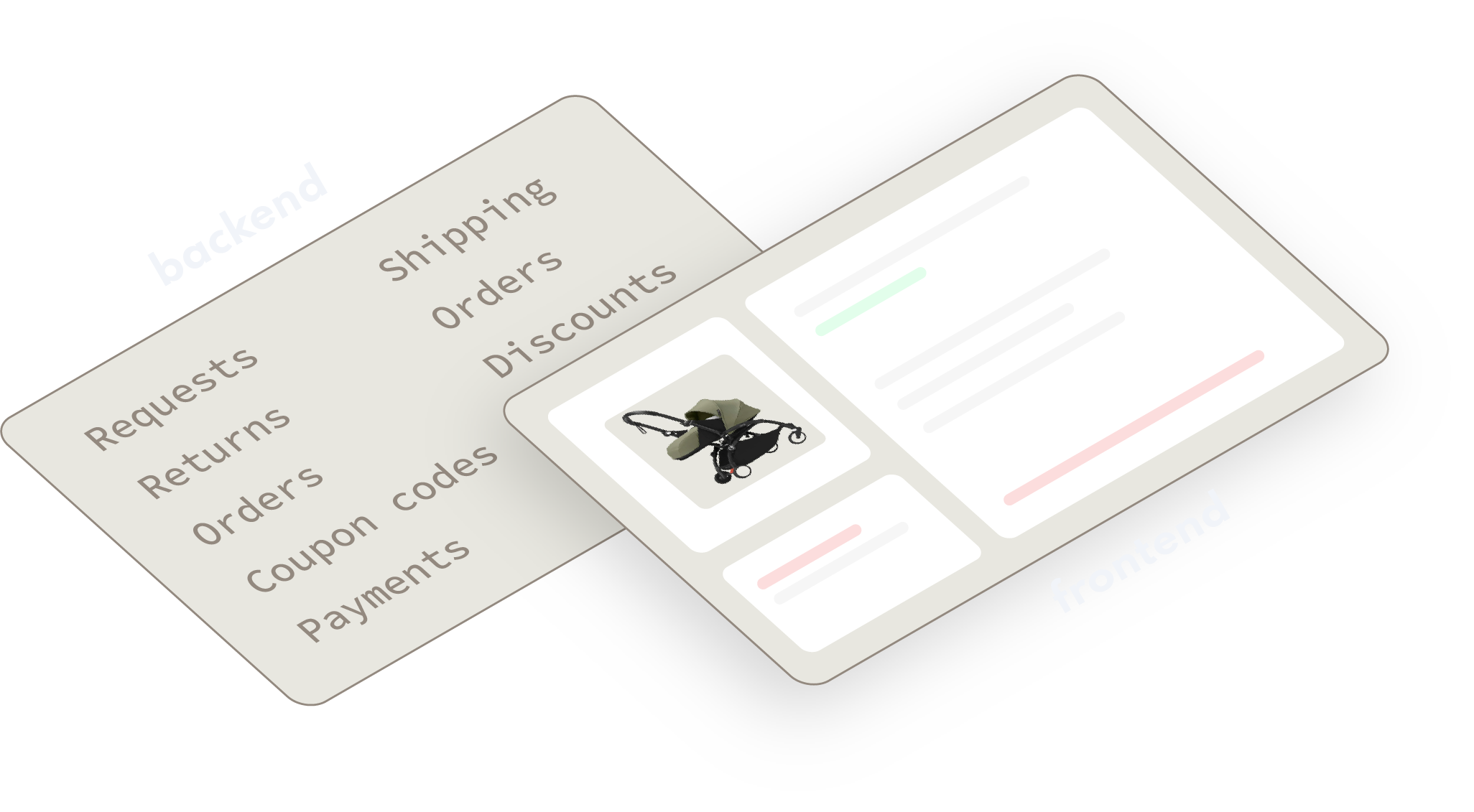
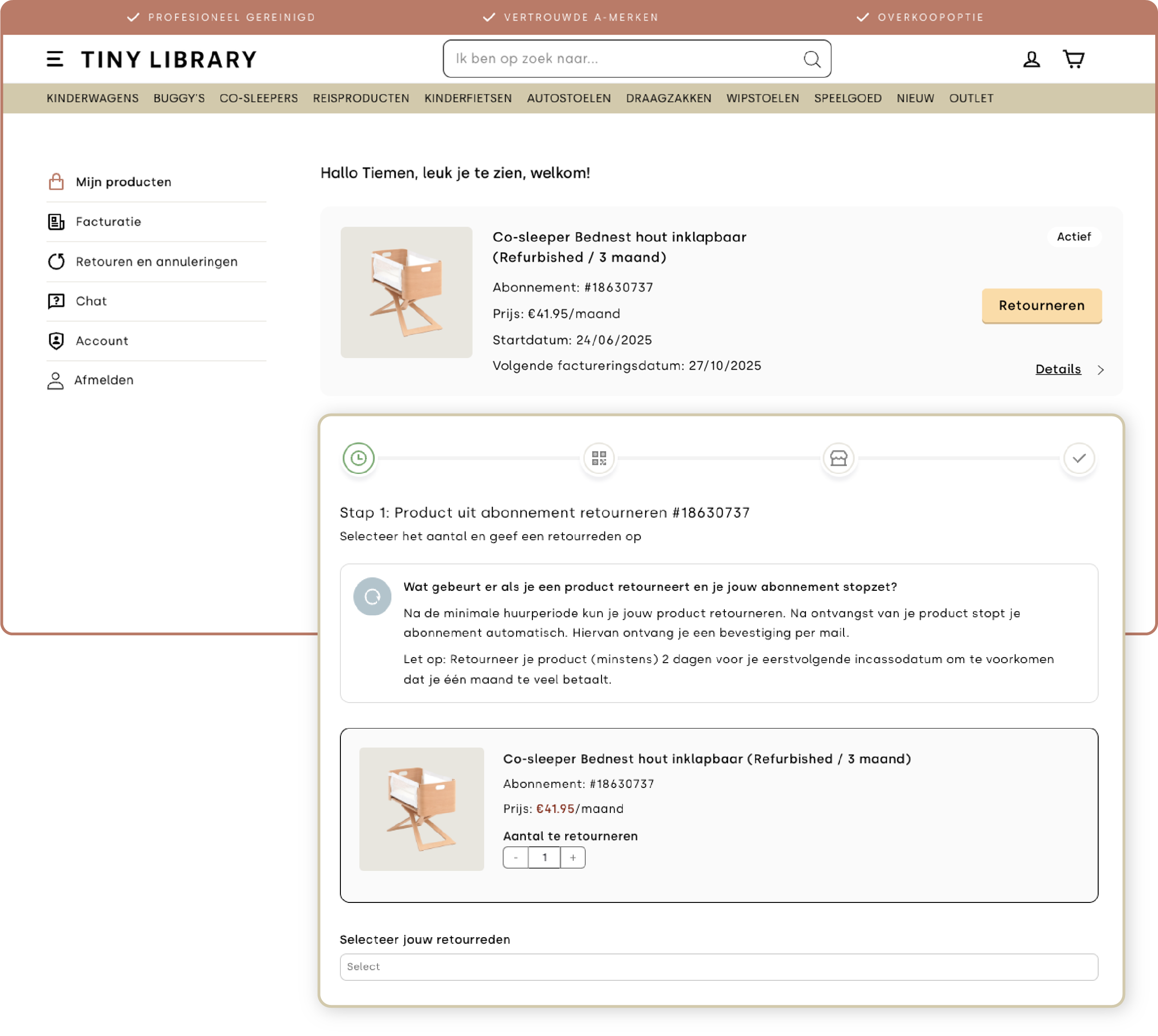
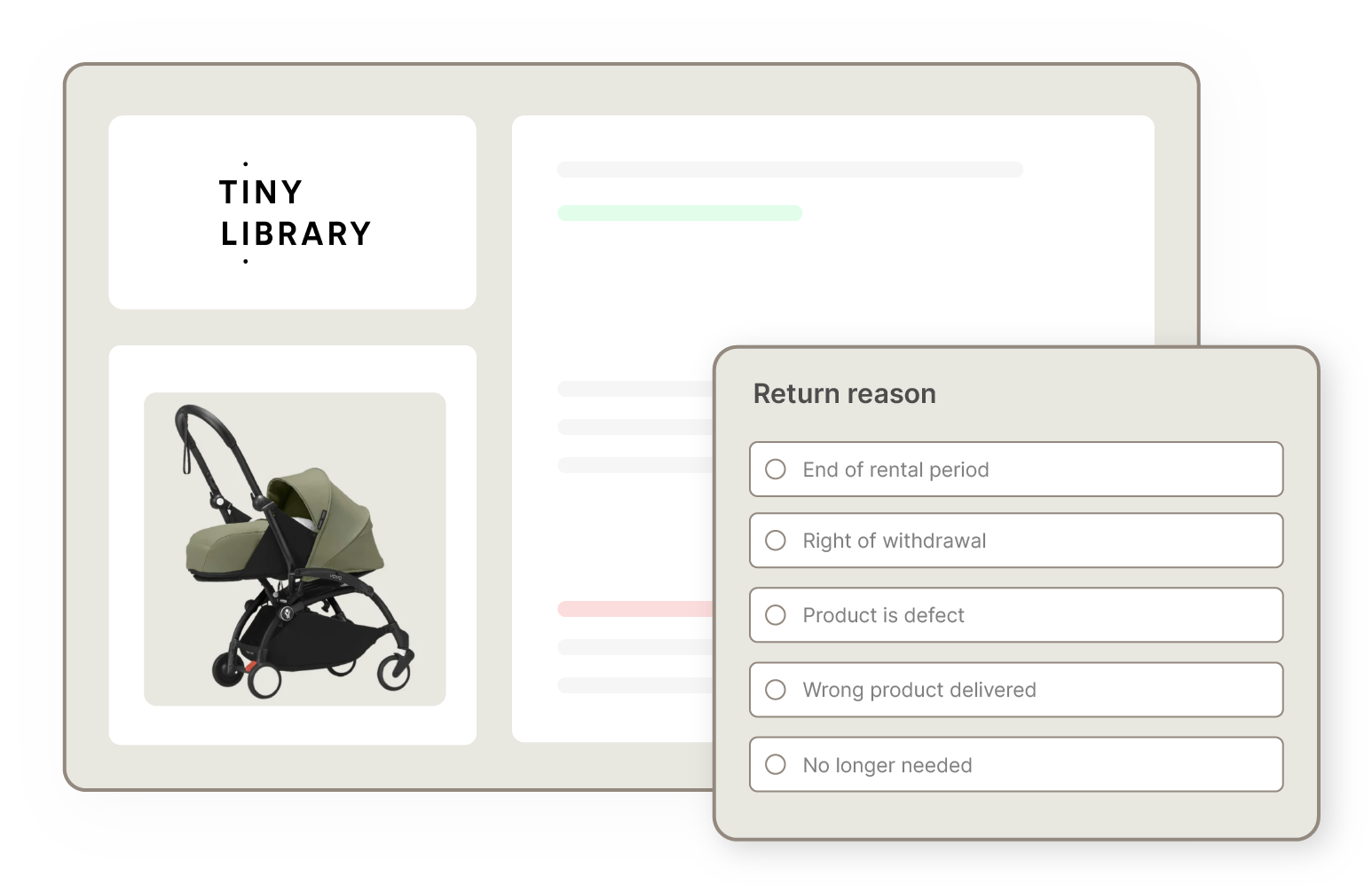
To improve this, Tiny Library developed its own customer portal with Firmhouse and created an integration with the API of Returnless. In this customer portal, customers can manage their subscriptions and directly indicate which products they want to return. Entering the e-mail address and order number is now no longer necessary. The subsequent steps - such as selecting products and choosing the shipping or payment method - remain the same, simple process.
Thanks to this integration, the return flow for customers is even smoother and the number of support questions has dropped by 43%. An impressive result, especially since the new customer portal was only launched just before the summer of 2025.
"Our customers no longer have to look up their order number and that results in far fewer customer service inquiries."
Tiemen Roest, Product Manager at Tiny Library
automatic return = automatic subscription pause.
Managing subscriptions is not a task you want to do manually. That's why Tiny Library has fully automated this process. As soon as a return label is scanned at PostNL, the subscription is automatically paused. Is the return processed and complete? Then the subscription stops. "Previously, we did this manually in our warehouse. This automation easily saves us 1-2 hours per day," says Tiemen.
Together with an external technical partner, Tiny Library realised both the customer portal and the link to the Returnless API within four months. "Returnless' API is very clearly defined," says Tiemen. "In addition, Chris or someone else from Returnless, is always quickly accessible. That saved us a lot of time."

different forms and smart return rules.
"What's nice about Returnless is that you can use multiple return forms side by side. That's ideal for us because we work with rentals, regular sales and sometimes defective products." explains Tiemen.
In addition to these different forms, Tiny Library uses its own return statuses, which are automatically updated based on the steps in the return process. From the moment the return is scanned at the carrier to the moment the package arrives and the package has been checked.
In addition, Tiny Library uses Return rules to automatically forward certain returns to external refurbishing partners. This saves an additional shipment from the warehouse. "A lot of our products are used for a longer period of time. Those need to be refurbished and cleaned first." says Tiemen. Still, Tiny Library manages to get many products ready for rental again within one day and add them back to the assortment.
more insight through return data.
Return data now plays an active role in inventory planning and forecasting at Tiny Library. "We now know much better when products are returning," says Tiemen. "As a result, we have more insight into our inventory and know exactly what we can re-rent or may need to buy in the coming period."
"Return data is essential with us. We use it to predict when an item will be returned and can be re-rented."
Tiemen Roest, Product Manager at Tiny Library
ready for the future.
Tiny Library is already immensely proud with what they have accomplished. Tiny Library will continue to put their customers first and in addition they are focusing on deploying AI across the company to make manual actions smarter. One of the first successful processes with AI is the buy-back guarantee where AI can estimate the value of products. Tiemen explains, "We would like to offer a buy-back guarantee for sold products. That way we can buy back purchased products from consumers if necessary. AI plays a big role in determining the value of that product."
"Our process is slightly different from a standard e-commerce company, which is why Returnless' flexibility and support are immensely valuable."
Tiemen Roest, Product Manager at Tiny Library
get started for free.
Play around and test out all features for free. Or schedule a demo with one of our colleagues if you'd like more info first.